
Photographs of Fishbourne Roman Palace
Click on an image to see the full picture
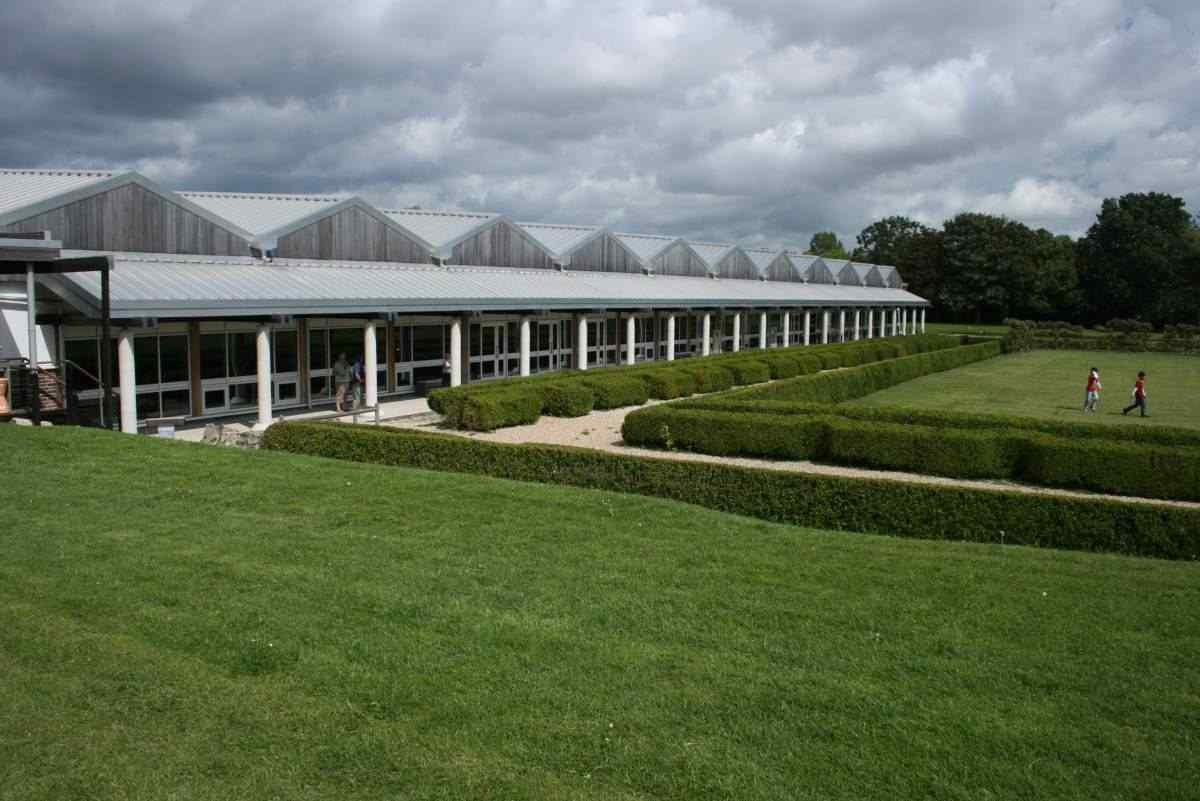
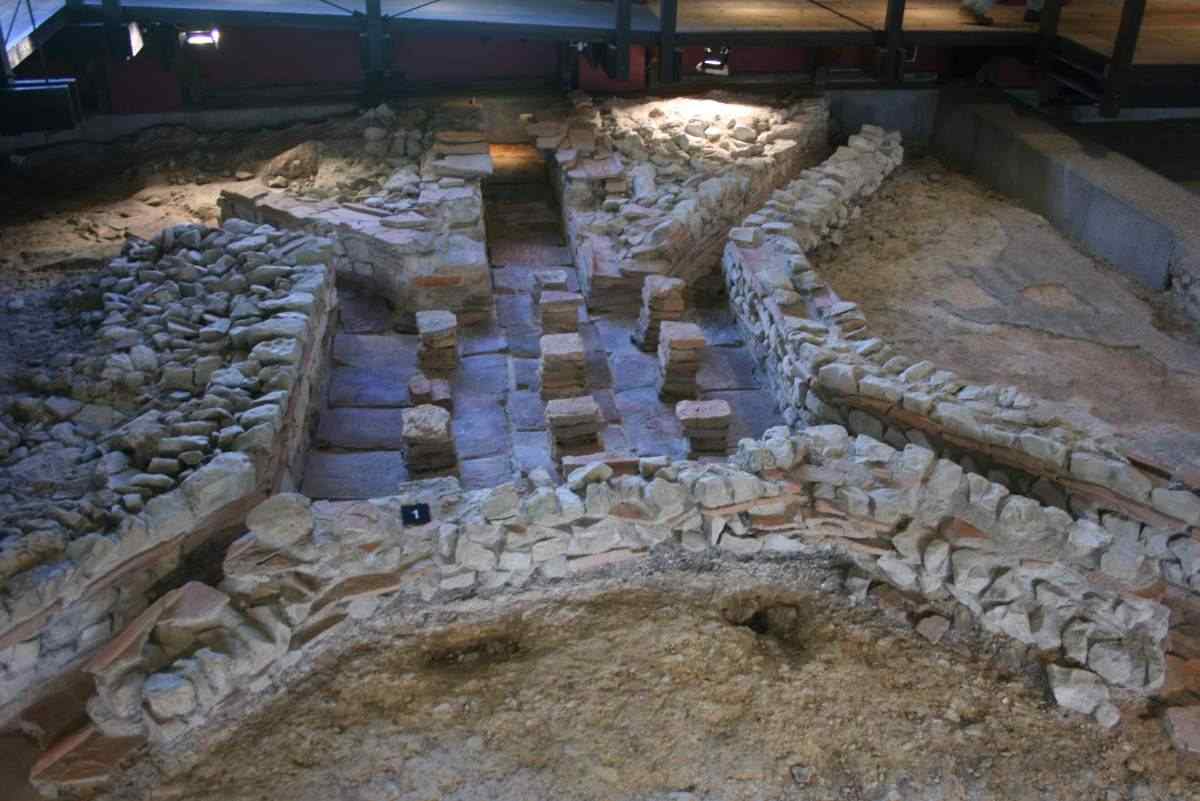
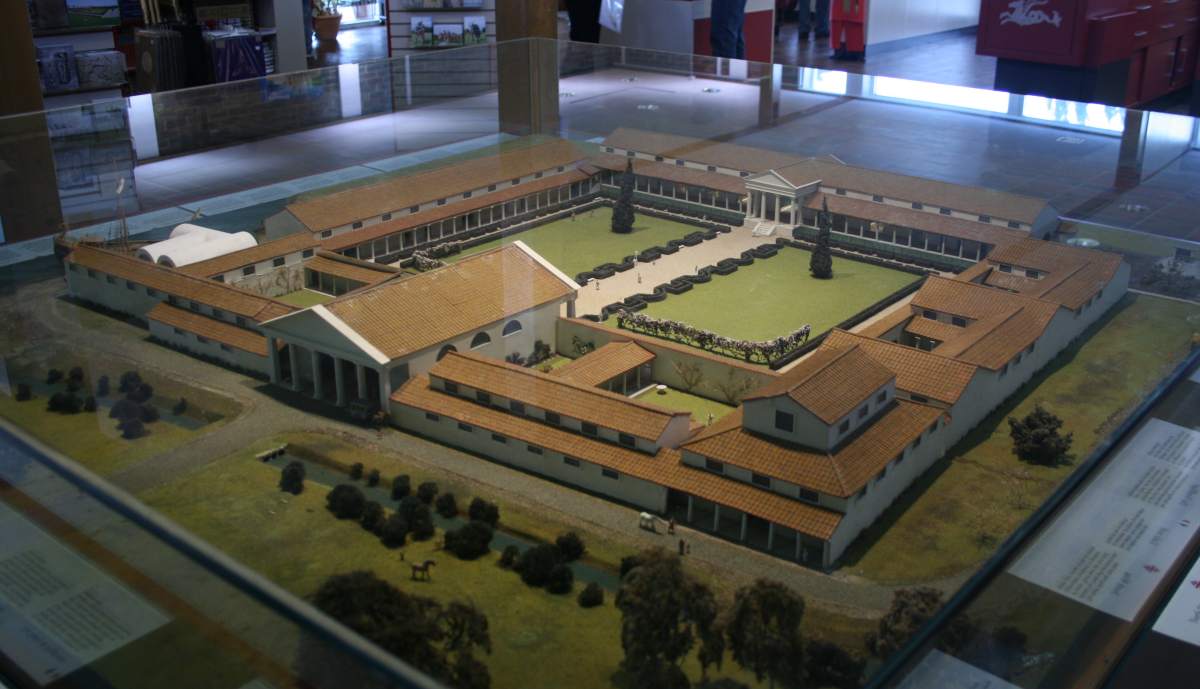
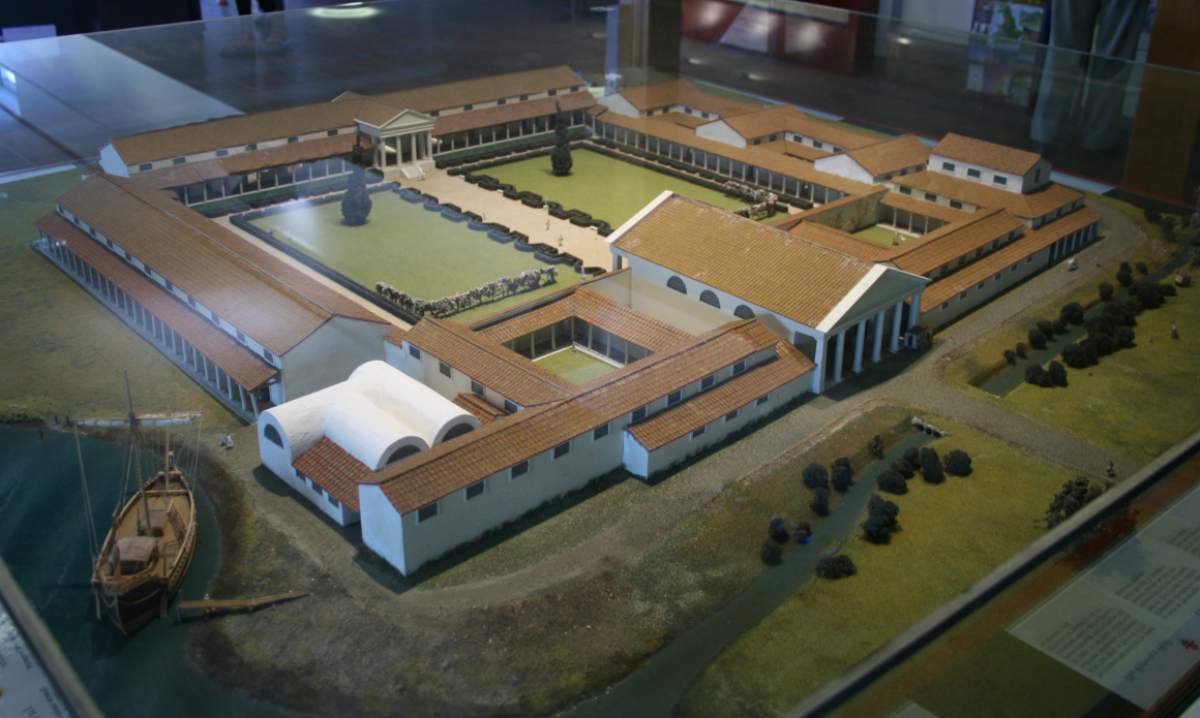
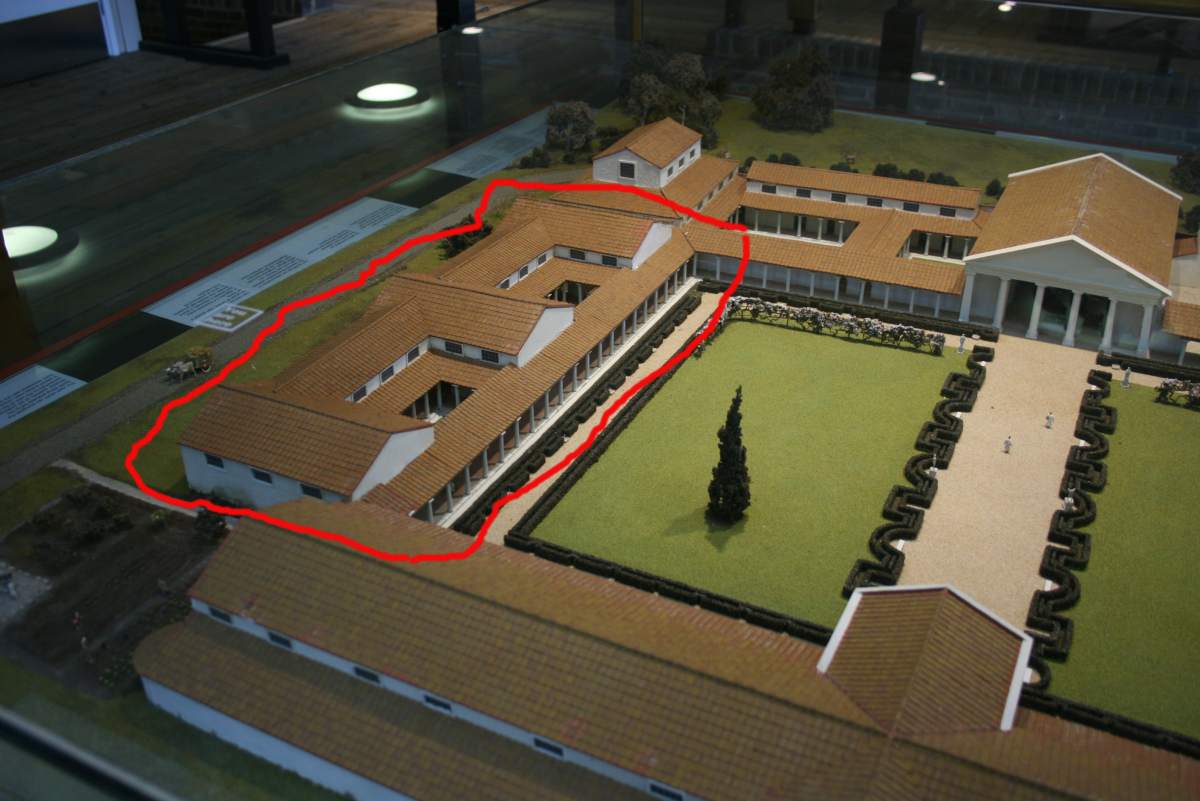
Fishbourne Roman Palace was discovered by accident during the digging of a water main
trench in 1960.
This Roman Palace, in the village of Fishbourne in West Sussex, is an important Roman
archaeological site. The large palace was built in the 1st century AD,
around thirty years after the Roman conquest of Britain.
In size, it is approximately equivalent to Nero's Golden House in Rome or to the Roman
villa at Piazza Armerina in Sicily, and is by far the largest Roman residence known
north of the Alps. At about 500 feet (150 metres) square it is comparable in size to
Buckingham Palace.
It is thought that the palace was the residence of Tiberius Claudius Cogidubnus a pro-Roman
local chieftain who was installed as king of a number of territories following the first
stage of the conquest.
The only piece of the villa visible is the north wing outlined in red on the image
above. This contains the largest collection of in-situ mosaics in Britain.