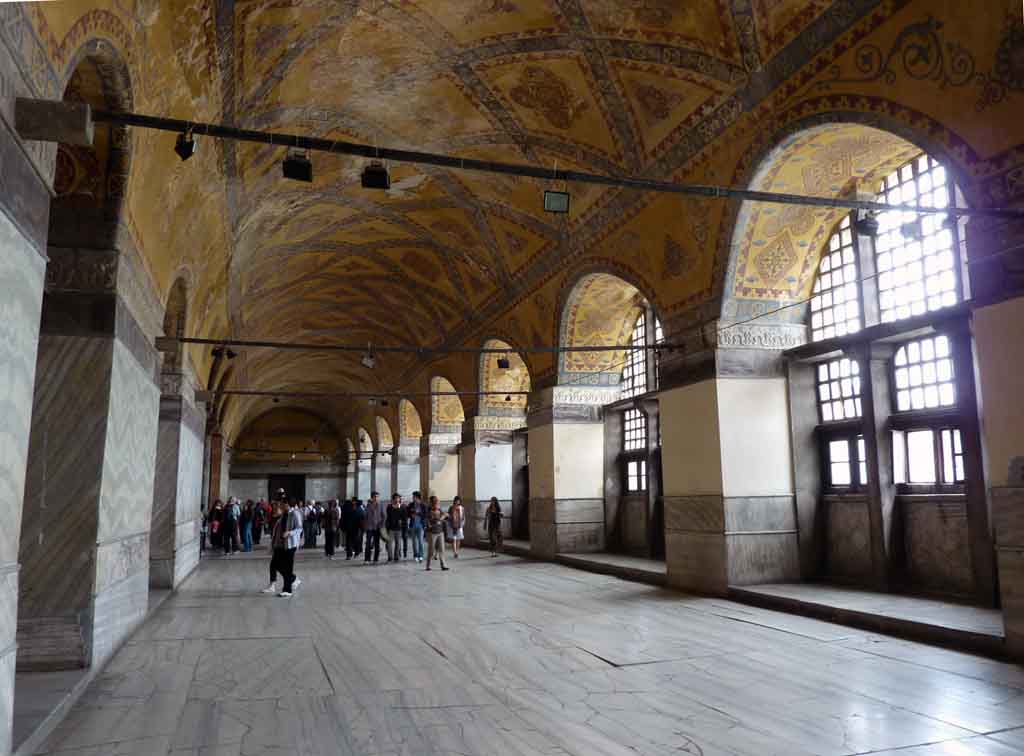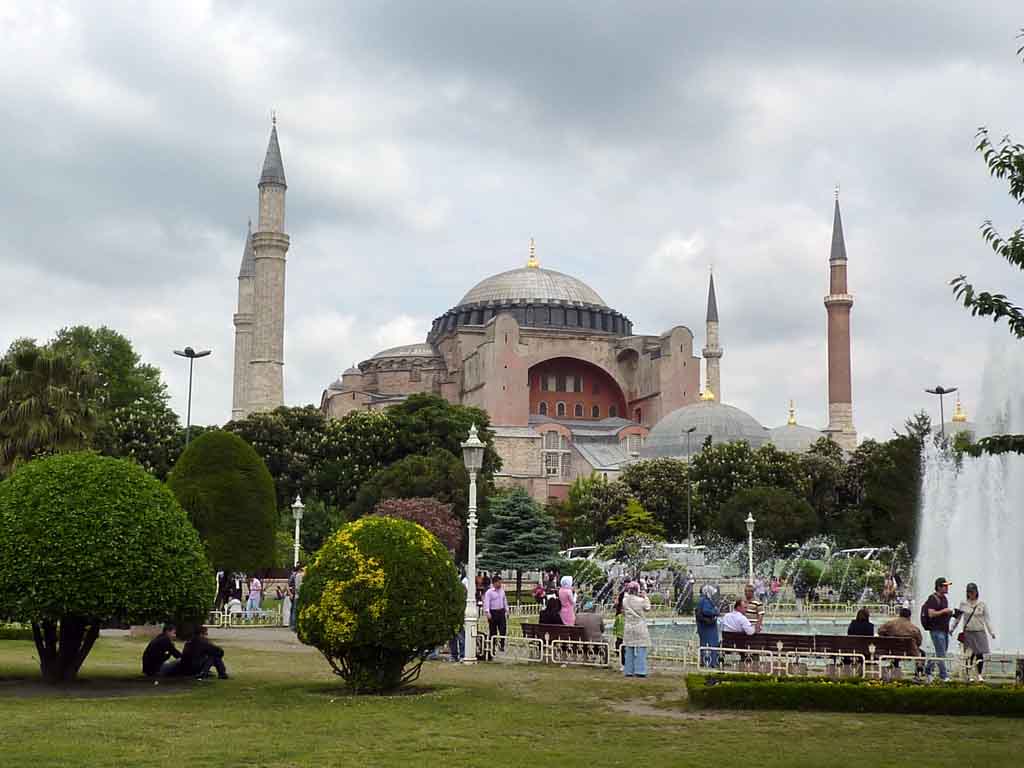
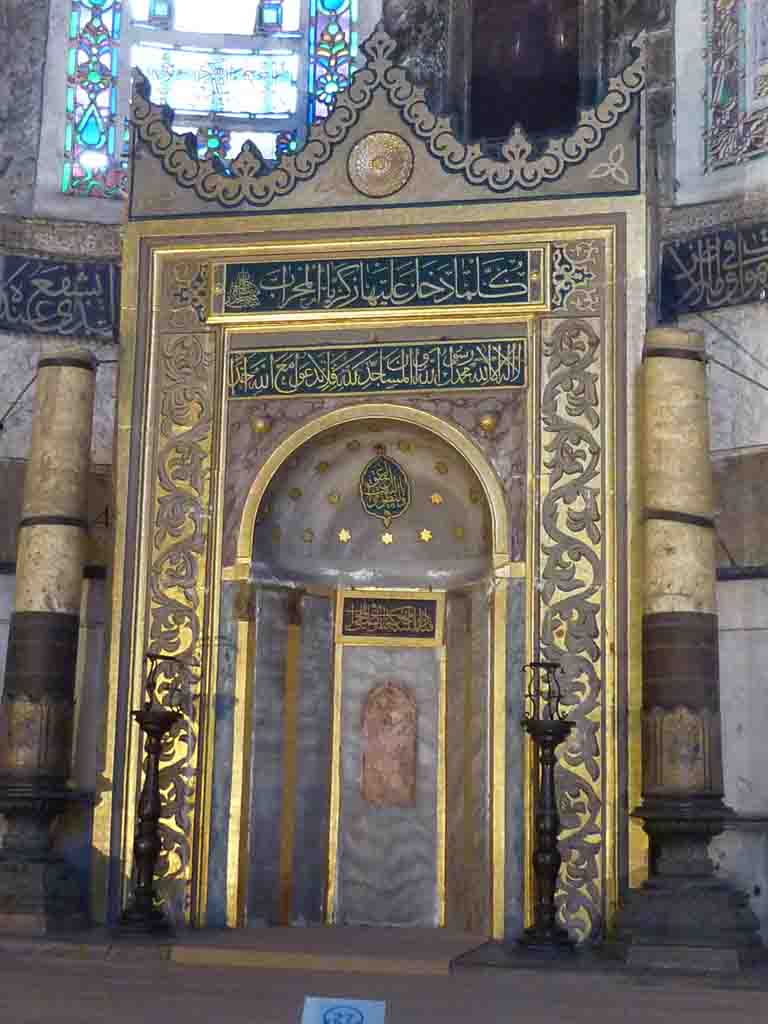
More photographs of Aya Sofya
Click on an image to see the full picture
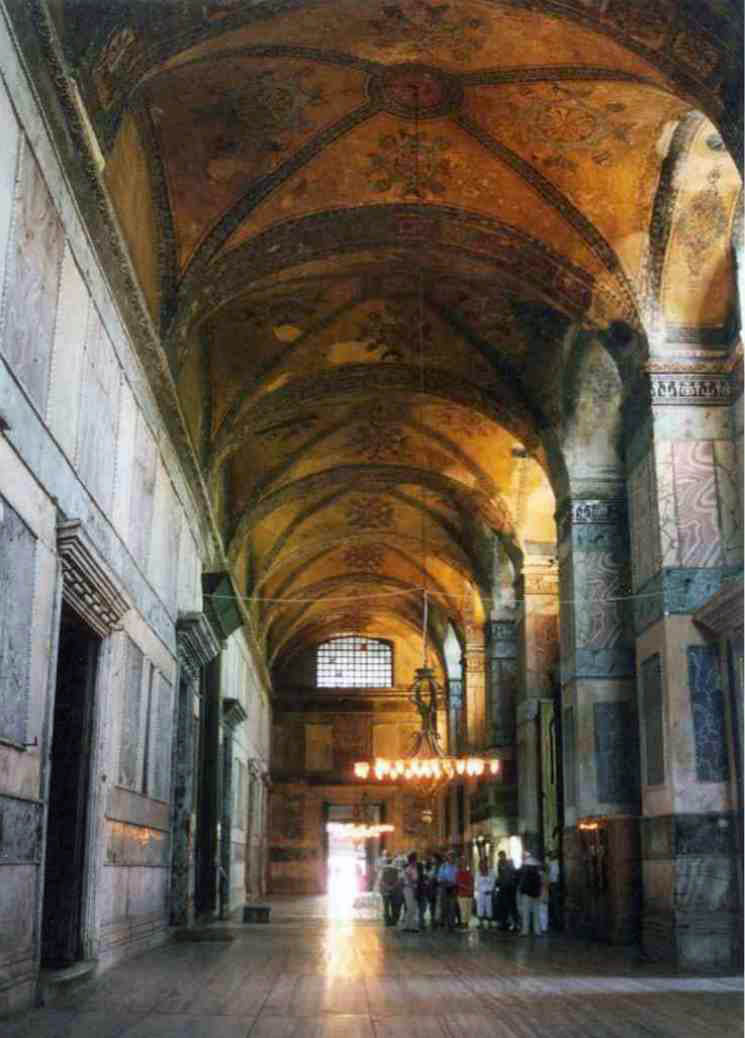
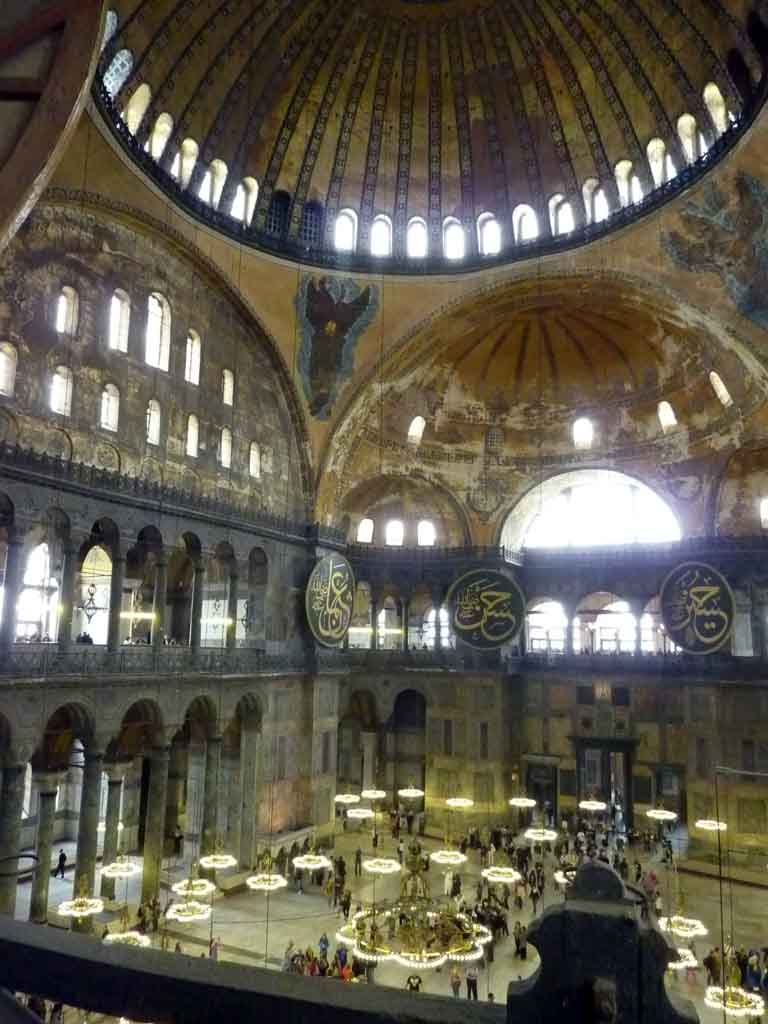
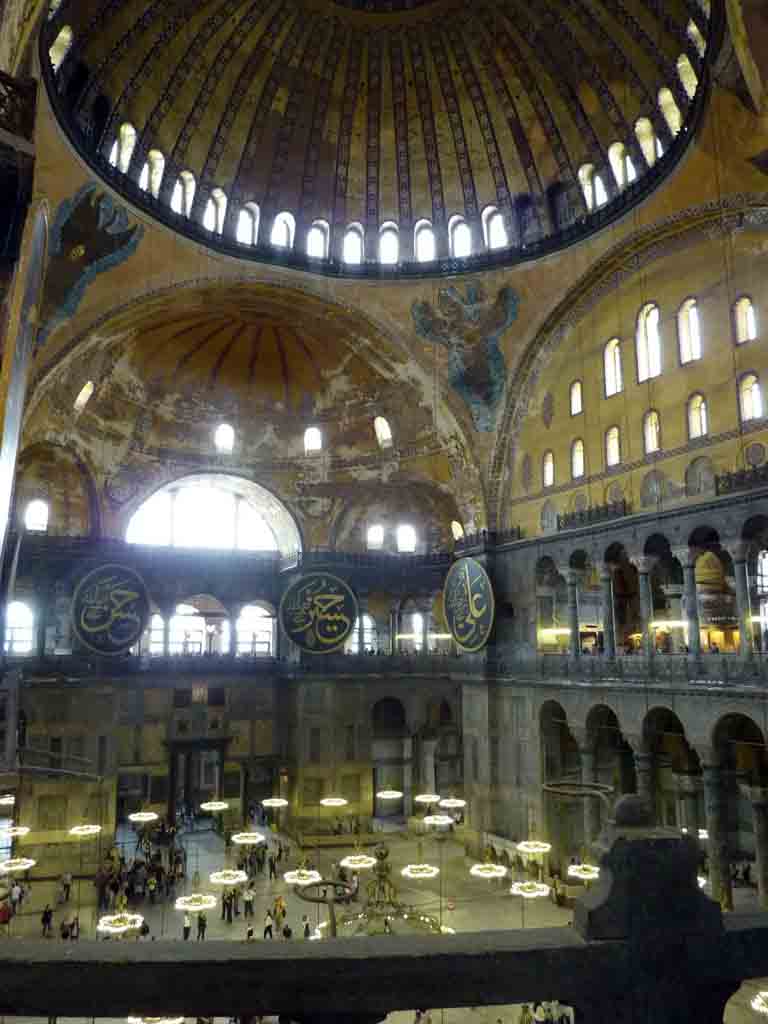
Hagia Sophia is one of the greatest surviving examples of Byzantine architecture. It was the largest cathedral in the world for nearly a thousand years,
until Seville Cathedral was completed in 1520.
It has a classical basilica plan. The main ground plan of the building is a
rectangle, 230 feet (70m) wide and 246 feet (75m) long. The area is covered by a central dome
with a diameter of 102 feet (31m), which is just slightly smaller than that of the Pantheon in Rome.
Some of the original Byzantine mosaics have been uncovered, but only those on the gallery level.
The Islamic calligraphic roundels suspended from the main dome since the 19th century remain in
place and make for a fascinating religious contrast with the uncovered Christian mosaics. The
names painted on the eight wooden medallions are: Allah and Muhammad (flanking the apse); the first
four Caliphs Abu Bakr, Umar, Uthman and Ali (at the four corners of the dome); and the two grandsons
of Mohammed, Hasan and Husayn (in the nave).
Back to the introduction
Mosaics in Aya Sofya
More mosaics in Aya Sofya
Istanbul
Turkey